
Passage Planning: New Zealand to Fiji
Finding a safe, comfortable route across 1,100nm of open ocean from New Zealand to Fiji.
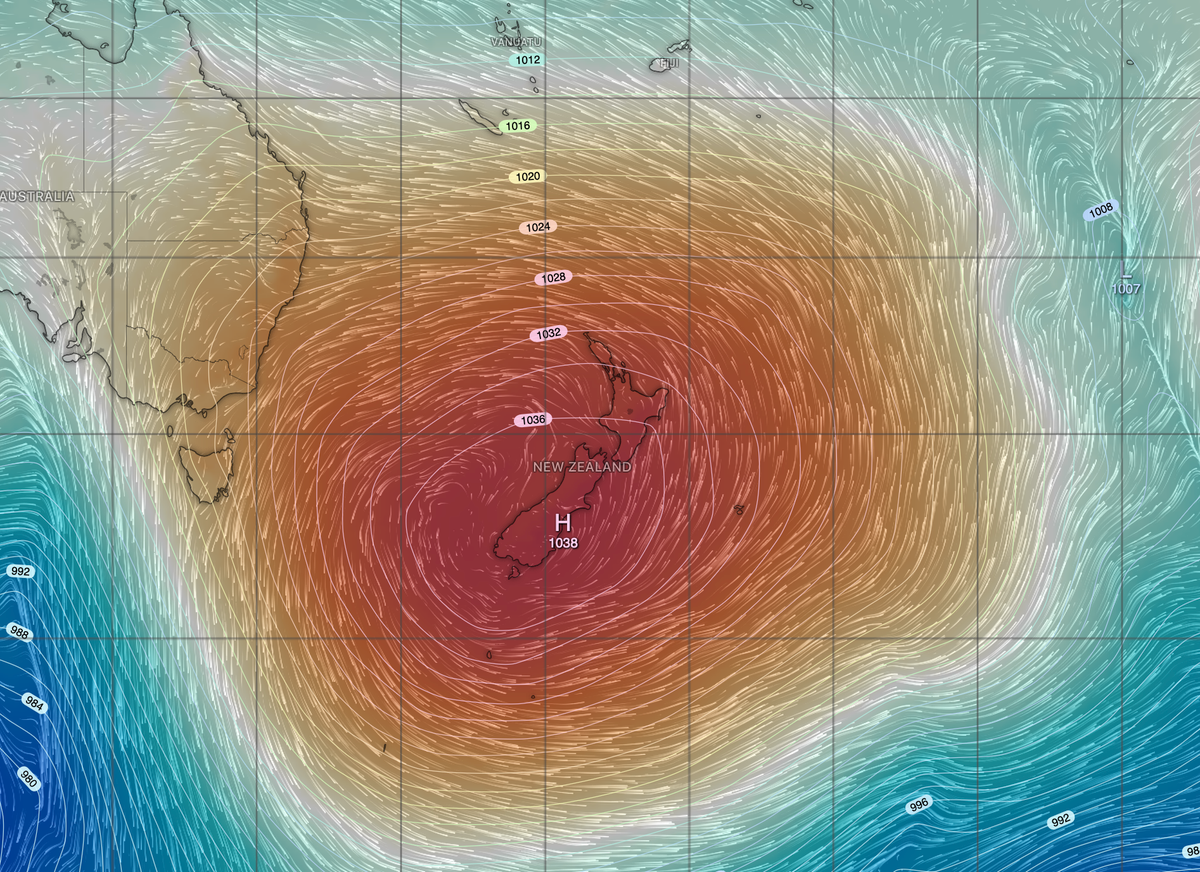
Confirmation bias is a cognitive bias whereby you focus on evidence that aligns with your beliefs while dismissing or discounting evidence to the contrary. It's the mother of all cognitive biases. It is a huge challenge in weather routing and departure planning for ocean passages.
We're headed back to Fiji for another season. We need to get across 1,100 nautical miles of ocean and three climate zones to get there.
We have three friends flying in from the US next week to join us on the passage. The fall temperatures are dropping. Pam has us provisioned. The boat is ready. All of our buddy boats are ready to go. We are eager to get to Fiji. There is a lot of self-imposed pressure to get going. Many boats have decided that Sunday and Monday are the days to go.
And therein lies the challenge. Tamping down the temptation to ignore evidence that this isn't a good weather window and that we need to wait for a better one.
Riding the High
High pressure systems roll across the Australian Bight, the Tasman Sea, and New Zealand from left to right, west to east, every eight to ten days. There are low pressure troughs in between the highs which bring rain and unsettled weather.
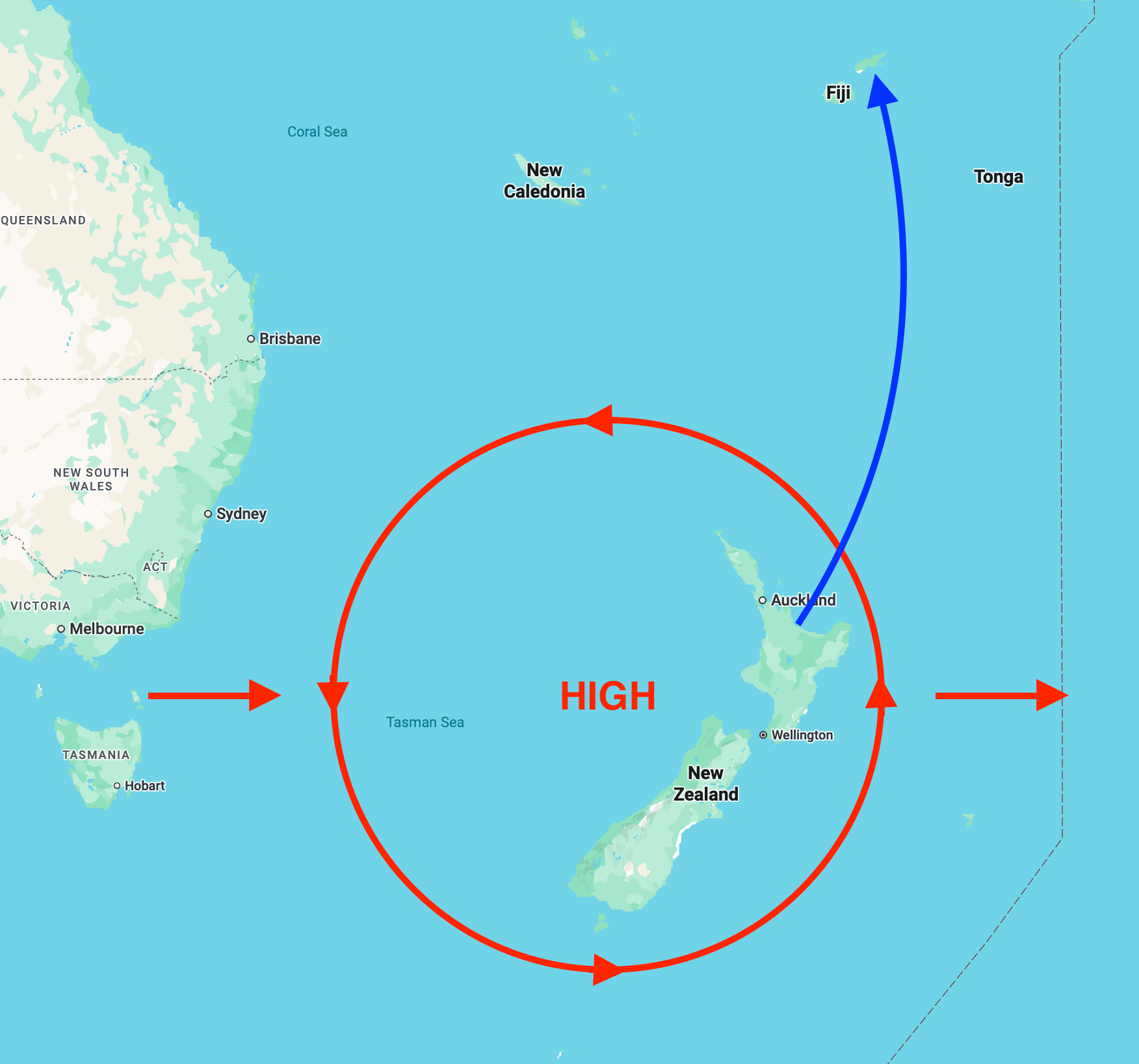
The strategy is to leave on the back of the low-pressure front and on the front edge of the incoming high-pressure system and ride the southerly winds north to Fiji. But only if the high isn't too high. Somewhere between 1020-1025 mb is about right. Higher than that creates strong winds, and with strong winds come rough seas.
Think of a high-pressure system as a mountain of air. The higher the mountain, the steeper the hillsides, and the faster the air flows down the hill. All of the wind roaring down the hill piles up against itself and creates what meteorologists call a "squash zone."
Our Weather Information Cup Runneth Over
There is a huge amount of weather information. Add to that a constant din of dockside scuttlebutt on WhatsApp, and you can get overwhelmed. We try to keep things simple:
- Is this a normal high-pressure system?
- Is the forecast sea state below our threshold for the route (4 degrees RMS and .2 RMS g)?
- Is the forecast wind blowing moderately and in the right direction—ideally aft of the beam?
- Is the route free of closed, low-pressure systems?
- Is the forecast CAPE index low (atmospheric instability that causes thunderstorms—below 1,500 J/kg)?
If the answers to those questions are "yes," it's a go. We always start with the sea state. When the seas are calm, anything is possible. If the seas are rough, everything sucks.
We look at the forecast from six different numerical or AI weather models. The more agreement among those models, the more confidence we have in the forecast. If the models diverge substantially, we suspiciously dig into the details.
Finally, we send our plans and our rationale to our weather router, MetBob, for his commentary. He is a professional, New Zealand meteorologist. He'll often find things I missed. And, he'll offer a more complete explanation of what we are seeing in the forecast.
Every day we move one day closer to our departure day. And every day the accuracy of the forecast gets better. As the forecast conditions reveal themselves we can change our mind. The models are very accurate within three days, and reasonably accurate within 6 days (which is about the duration of our trip to Fiji). Even eight days out they worth considering.
Ultimately, it's up to us to make the decision to go. We are managing risk. The best way to minimize the risk from storms is to not go sailing into one in the first place.
A No-Go
We've decided this upcoming weather window is a no-go. It's too rough. It would be uncomfortable at best. At worst, we'd break things or hurt somebody.
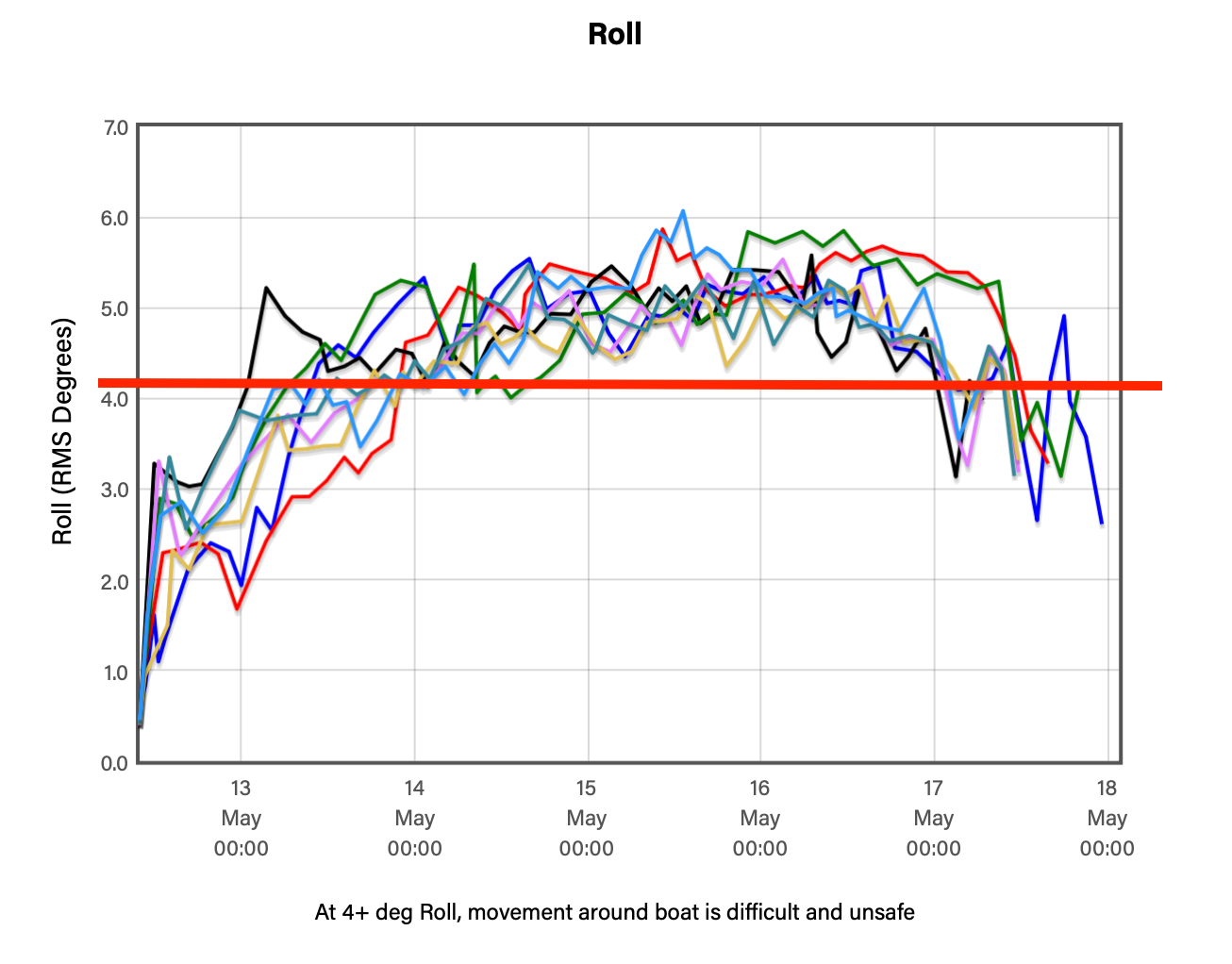
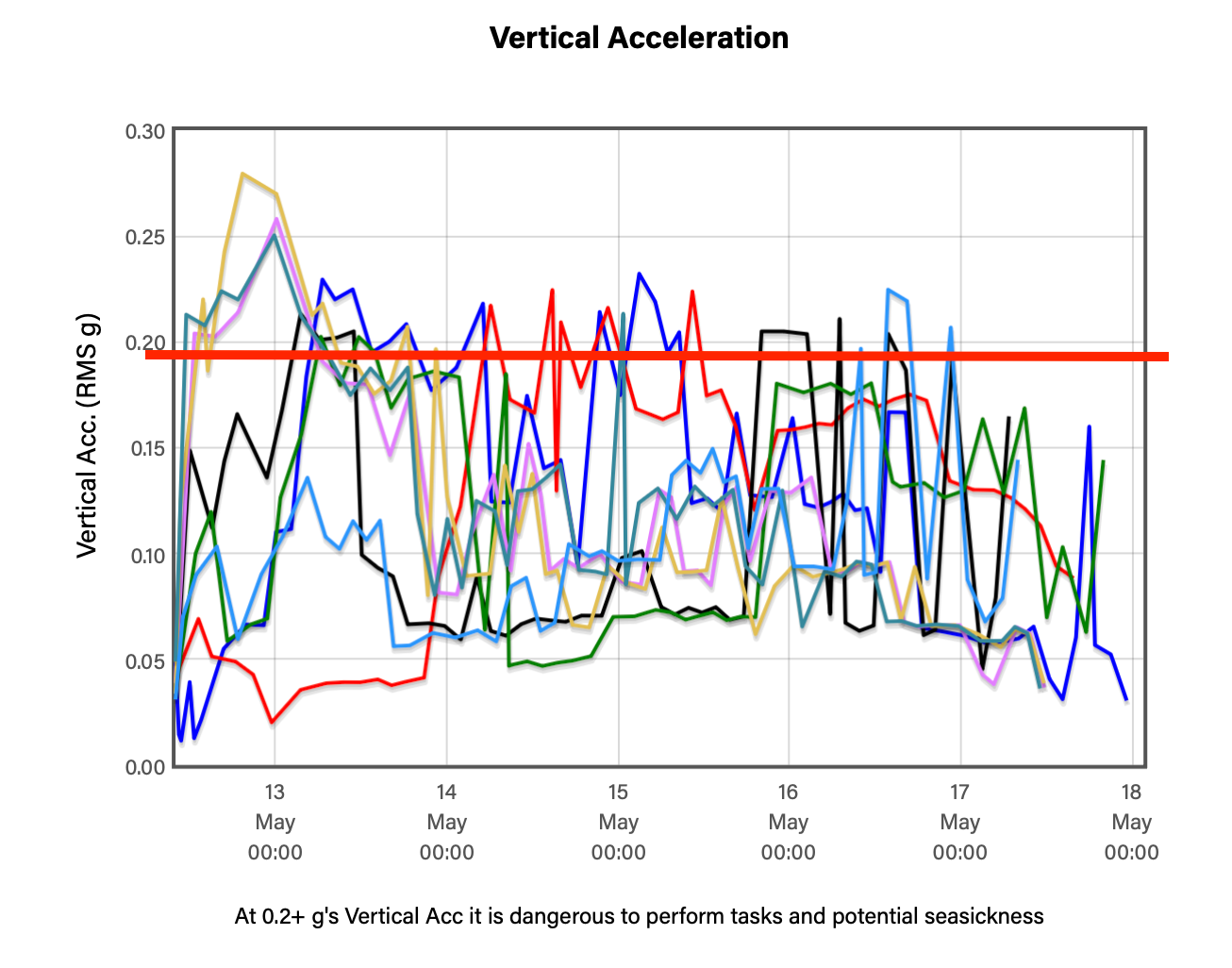
Two important datapoints: Roll and vertical acceleration. They tell us the sea state. The redline shows our threshold for a rough sea state. When the seas are calm, anything is possible. When the seas are rough, everything sucks. Source: PredictWind
Most of the weather routers agree with our decision. A few hardy souls are sticking with their plans to depart. A well-found boat with an experienced crew can probably make this work. But it won't be enjoyable. As my old flight instructor would say, "...if you find yourself using the word 'probably' to describe your plan, go back and make another plan..."
So this passage is for those who can handle rough conditions for several days - not everyone's idea of fun. --Dr. Bruce Buckley, Australian meteorologist and weather router
I’m rating this now a 1 out of 10, departure is on hold ... And I’ve not mentioned the seaway, knarley [sic]!!! --John Martin, Ocean Tactics
I suppose we may as well do other things this coming week and fingers-crossed that the next HIGH is more suitable. As for why the waves are so high…. This is what happens inside a squash zone. The waves get pushed together, shortening their period and becoming steeper. --Bob McDavitt, MetBob
It's a bummer, but we'll sit this one out. The next window is due in around the 22nd of May.
While the conditions aren't good for sailing to Fiji, they are excellent for sailing up New Zealand's North Island coast. That's what we'll do!
Edit to add:
Our weather router and friend, MetBob had this to say about BFH (Big Fat Highs):