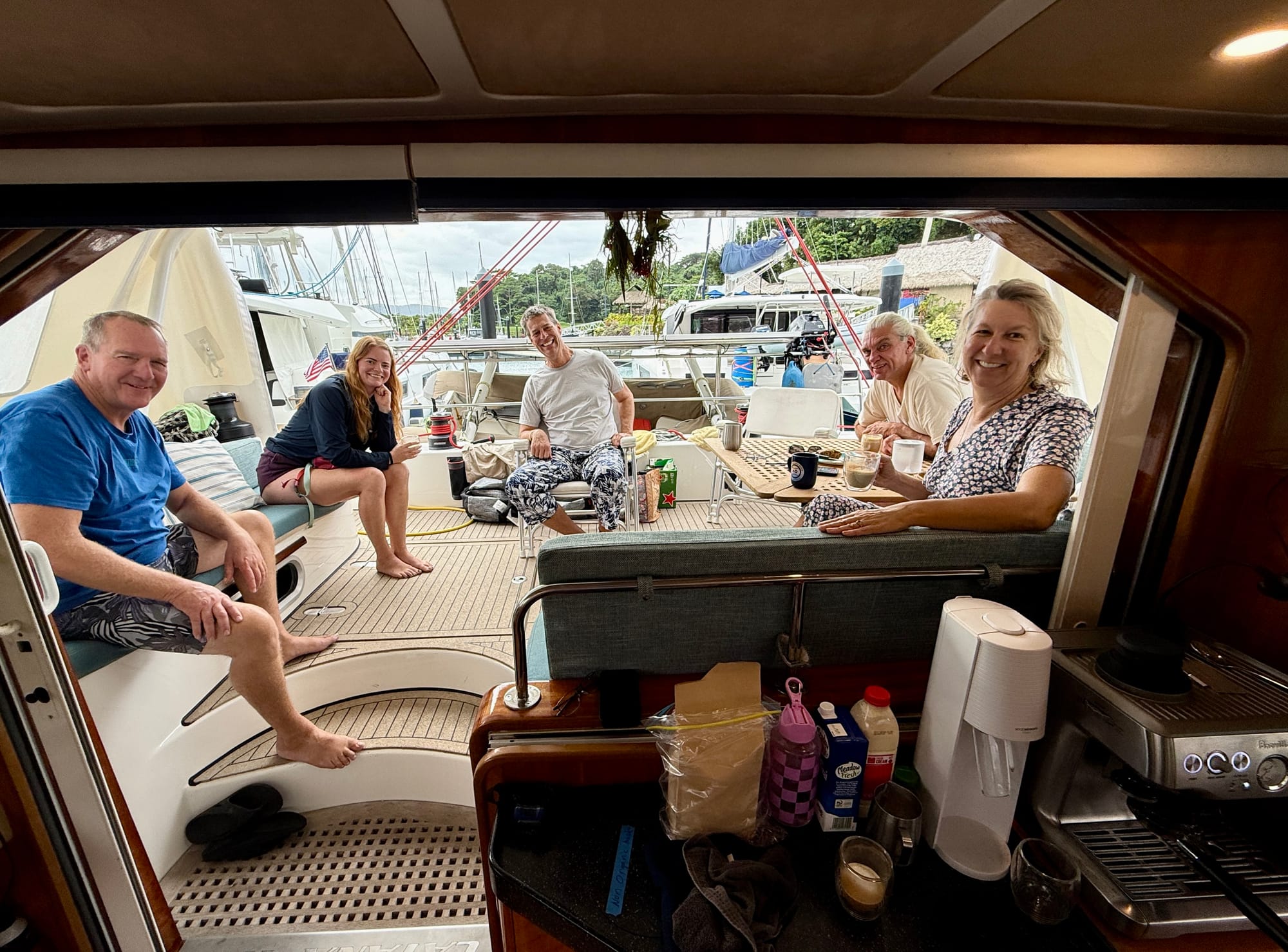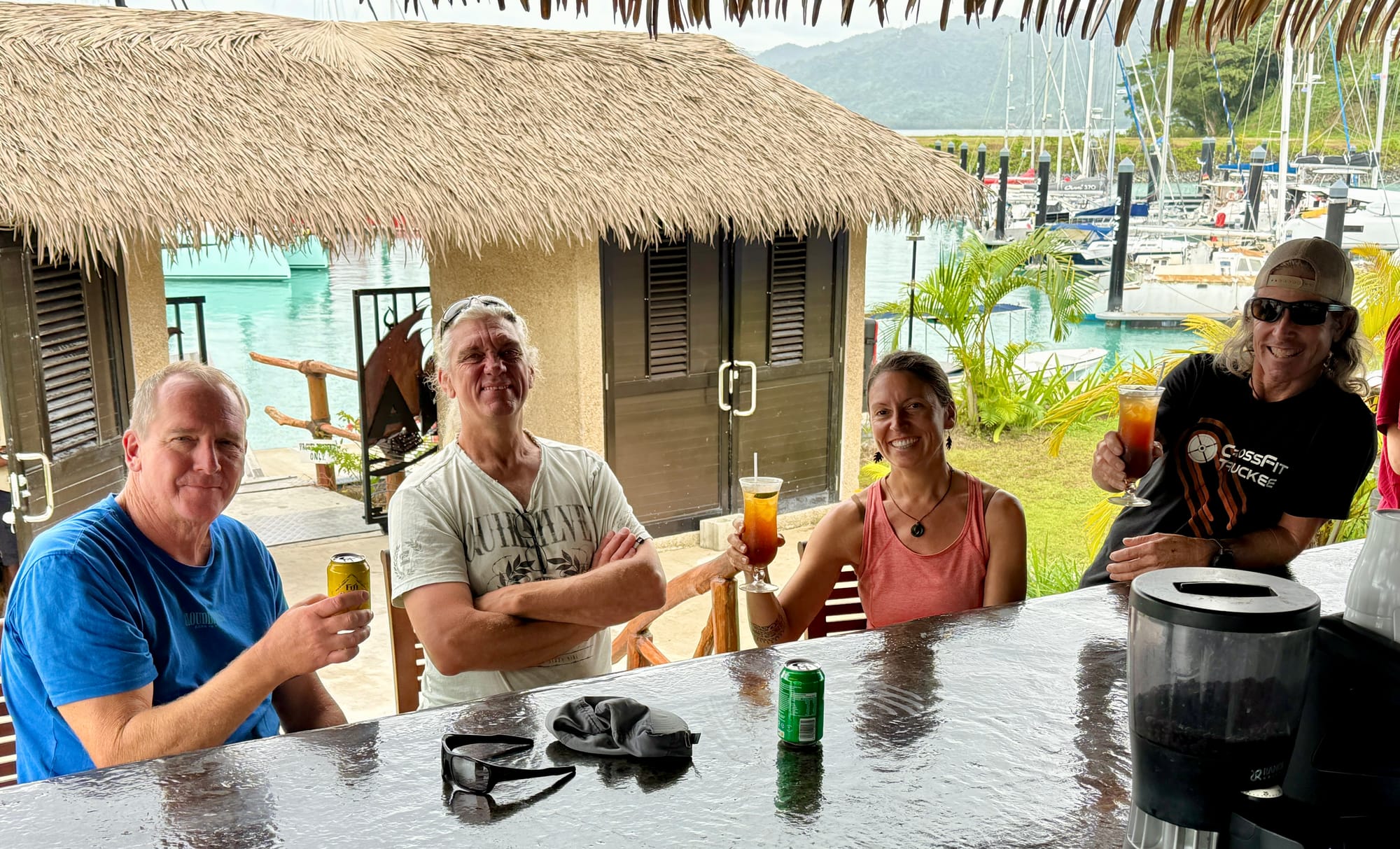
Bula Bula!
Roam is back in Fiji for another season after a fast, 1,200nm reach across the South Pacific.
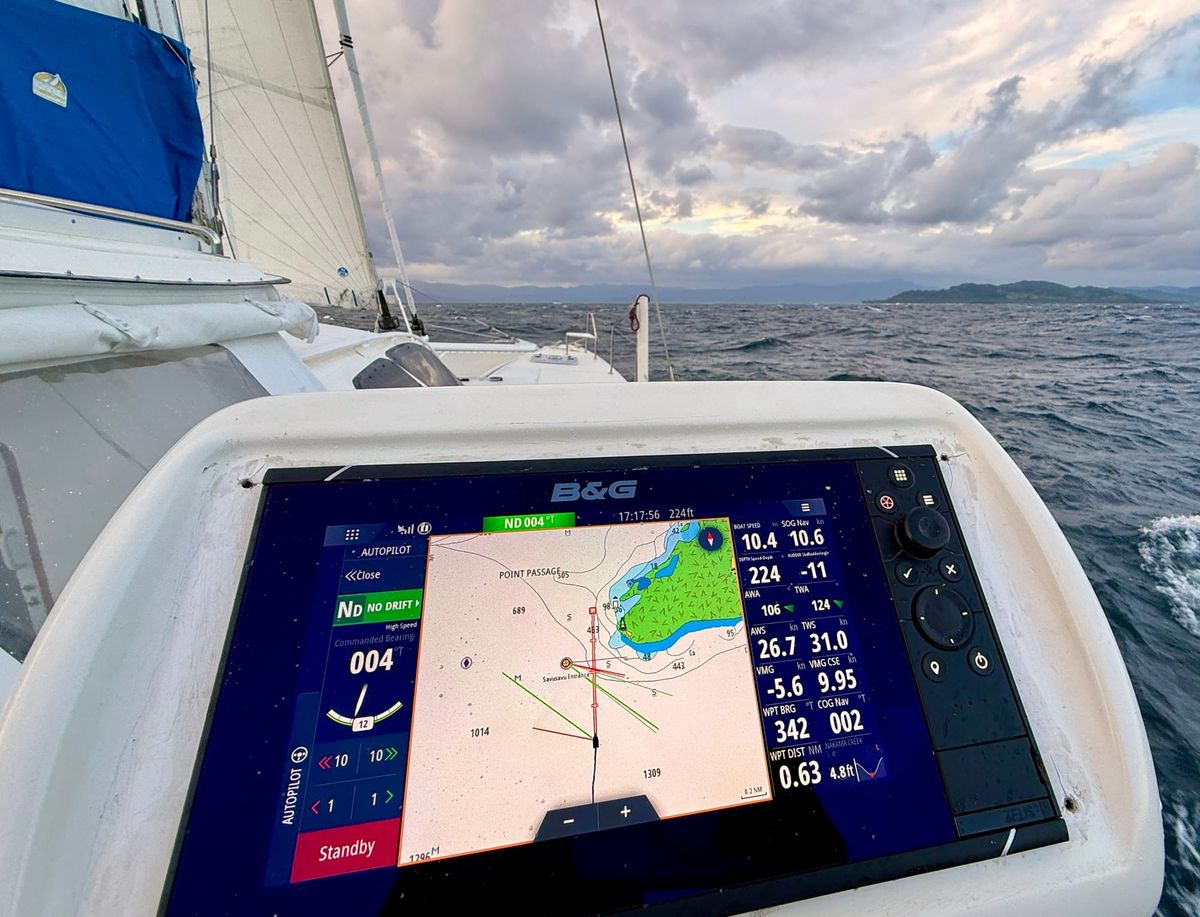
Roam is once again back in Fiji after a fast, six-day, 1,200nm sprint across the South Pacific Ocean. Almost immediately, the old feelings and memories from last year came back. My blood pressure drops. Smiles and friendly greetings. I remember why I wanted to come back. Bula Vinaka!
The passage was almost exactly as forecast. We expected a rough final day, and we got it. It was the investment made in order to take advantage of this weather window. It worked out.
Our passage time was longer than planned. Partly due to the sea state toward the end. And also because we broke our topping lift on the first day (the rope that holds the end of the boom up when the mainsail is being raised and lowered). Without that line, we can't fly our symmetrical spinnaker without also having the mainsail up.
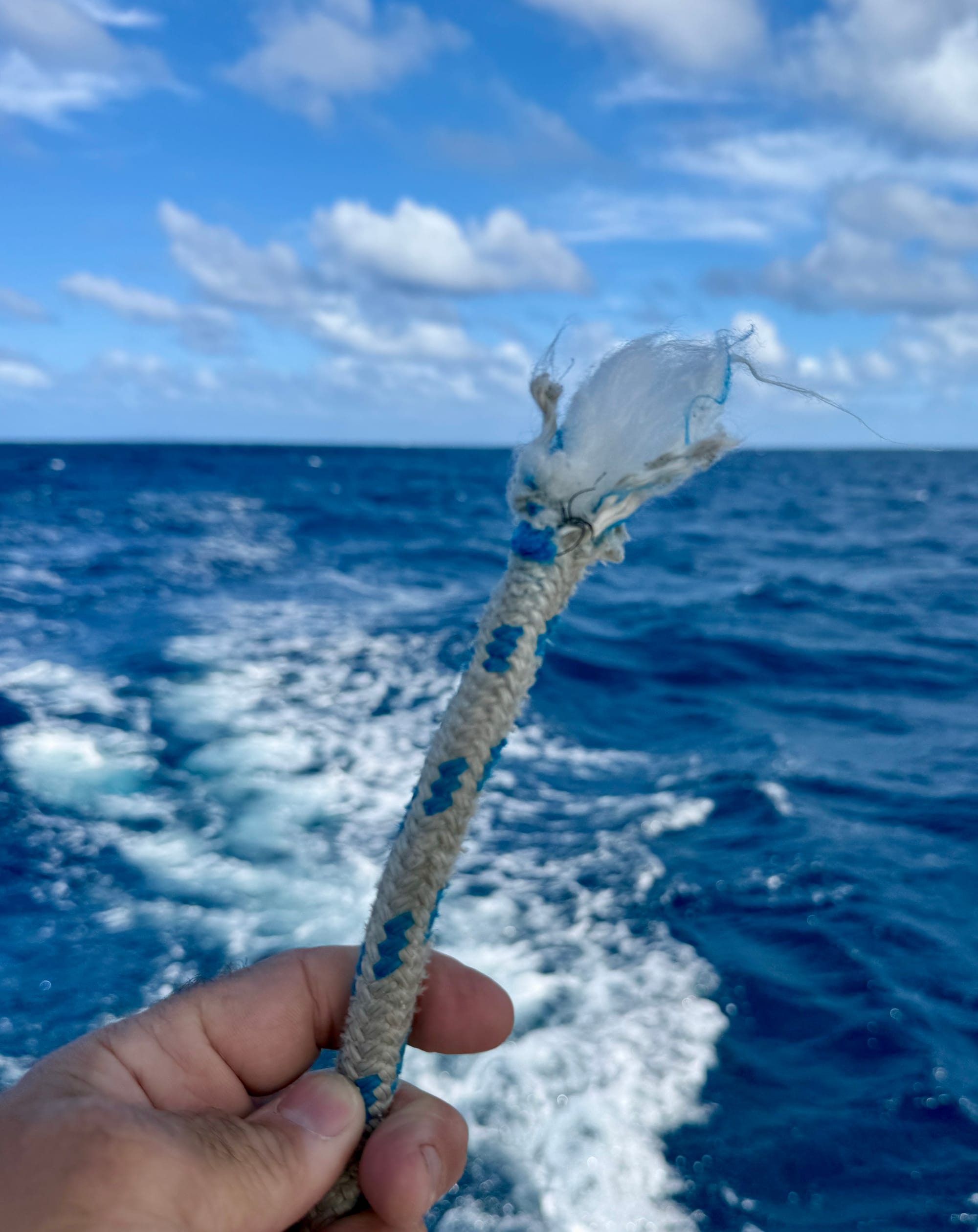
Roam doesn't have a backstay. When the spinnaker is up by itself, we count on the topping lift/mainsheet combination to provide a counterforce to the sail's forward pull.
The solo symmetrical spinnaker is our preferred sail configuration when the wind and seas are behind us. Without that option, we sail slower with the "chicken rig" (mainsail with the solent winged to weather with a spinnaker guy).
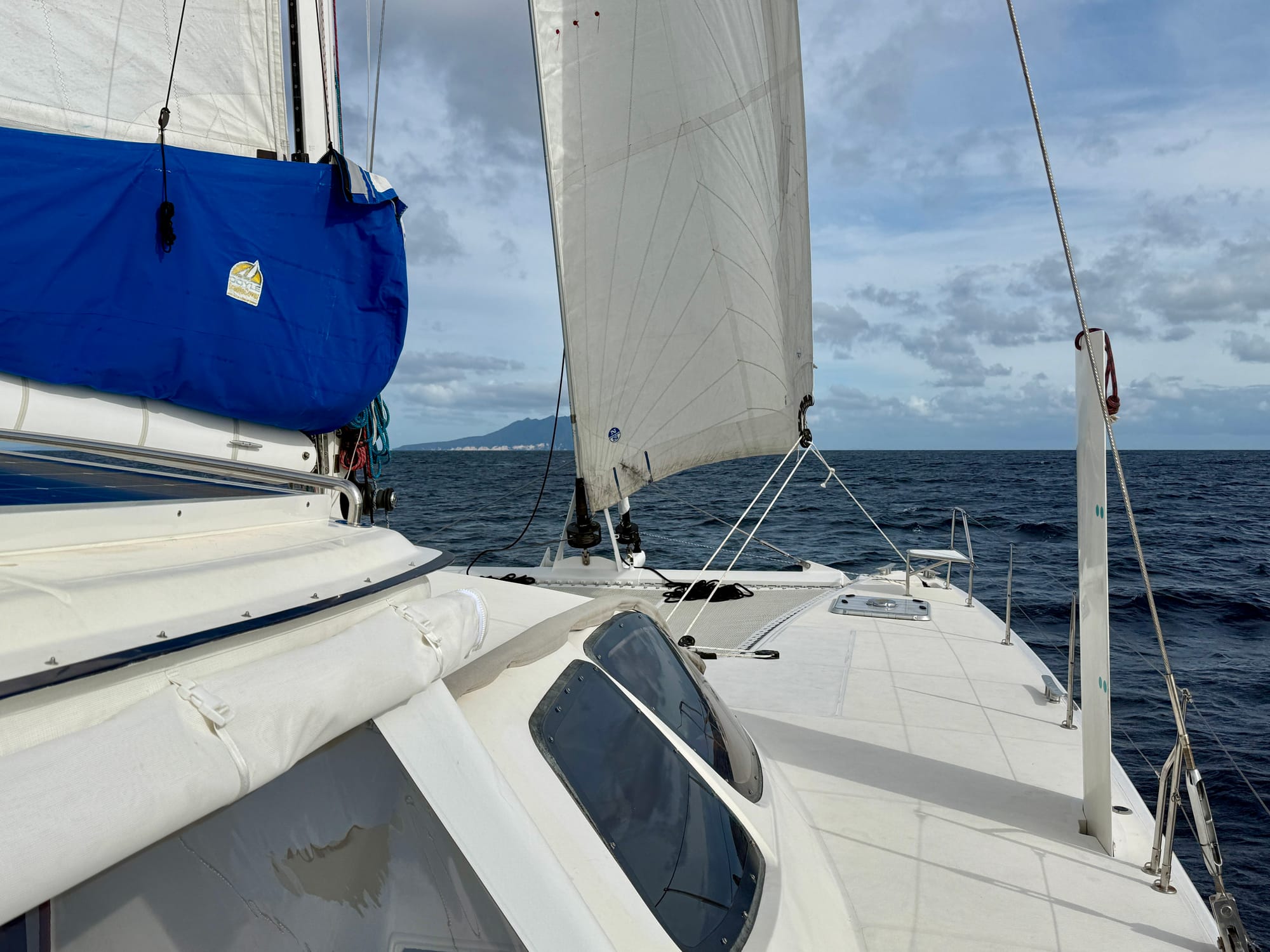
We tried flying the symmetrical spinnaker with the main up. The way we did it on monohulls. In big seas, the boat surfs down the waves and the apparent wind swings forward. The main interferes with the air flow over the spinnaker, and it collapses. The ensuing shock loading on the rig is unnerving. It needs constant attention. Okay on a race boat. Not okay on a short-handed cruising boat. We took it down.
We need a topping lift to reef the main. We reef while sailing downwind. It's too risky to turn the boat upwind in these seas. Our routing software indicated we'd need to reef by Day 4. We brought the spinnaker halyard around to the back of the boat and tied it to the remnants of the topping lift. That was good enough to get the job done.
We tried motoring for a few hours, loping the port engine, to see if that might let us sail a lower wind angle with better speed. After a few hours, we hit or caught something in the propeller that caused violent shaking. I thought the engine would tear itself out of the boat. It was at night. Riaan was on watch, and Greg and I were asleep. Immediately, we were all up trying to get the transmission in neutral and the engine shut down.
It wasn't good. We seemed to have reverse but no forward gear. Could be the propeller hub. Could be the forward clutch pack in the sail drive. For the next few days, we were on the phone and WhatsApp with friends and mechanics trying to come up with a diagnosis and start the process of finding the parts and a mechanic who could help us in Fiji.
In what I can only describe as tremendous good fortune, it seemed to resolve itself. As we sailed into Savusavu Bay, we got our first break from the strong wind and waves. After aggressively running the engine in reverse, the forward gear seemed to engage. We had two working engines again! When maneuvering around a marina, two engines are a big help.
We arrived at Nawi Island Marina just after 6 p.m. We'd missed the cutoff for clearance. The marina staff tied us up, but we weren't allowed off the boat. We weren't allowed off even to adjust our lines. We made the best of it by grilling up "steak and chips" and well-deserved cocktails.
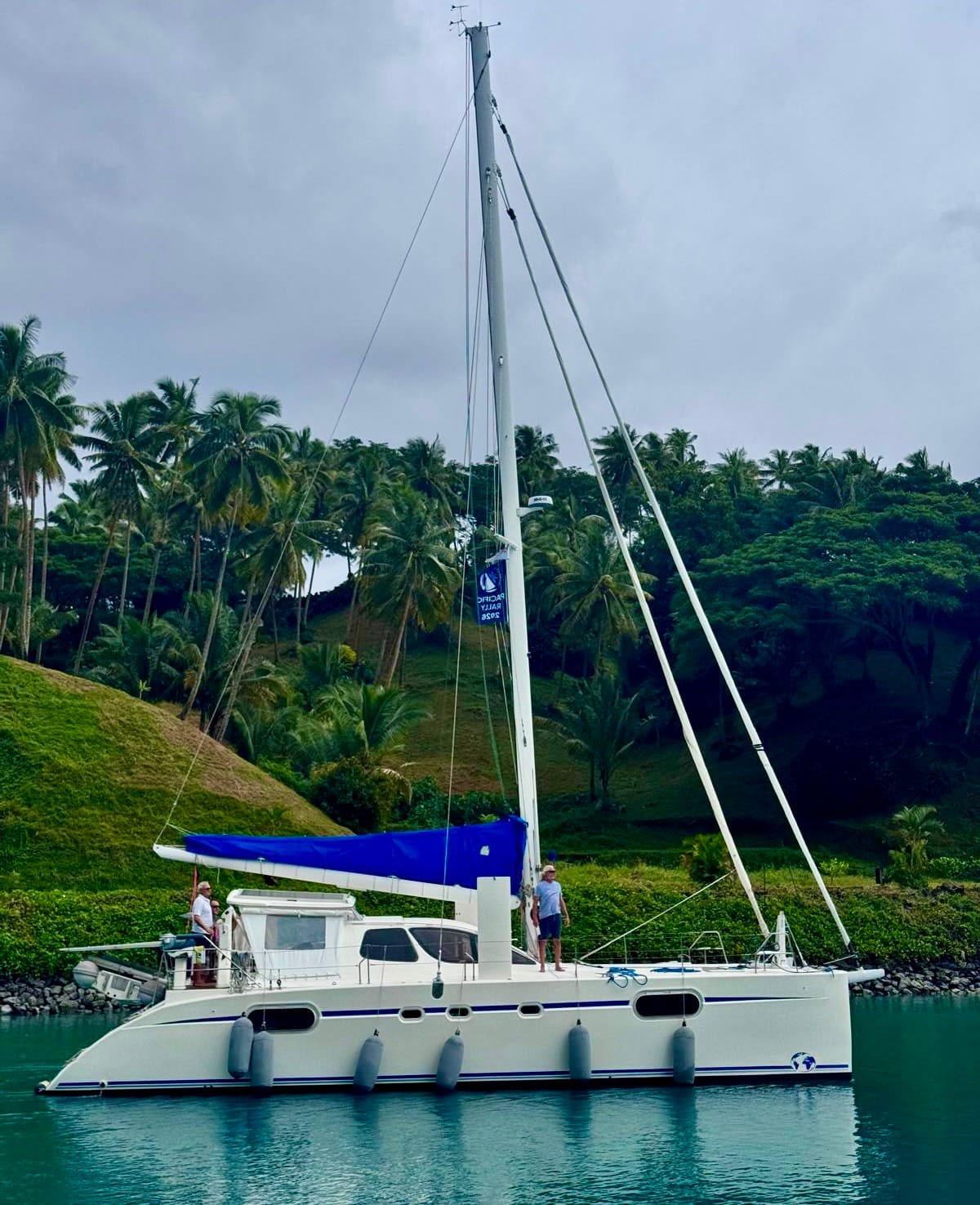
The next morning, Alumita from Health Security arrived to inspect us, issue our Certificate of Pratique, and clear our quarantine. With the yellow quarantine flag struck, the rest of the clearance team arrived—Biosecurity, Customs, and Immigration. By mid-day, we were finished clearing in and in our permanent slip. Time for a long, hot shower in Nawi's famous indoor/outdoor showers.
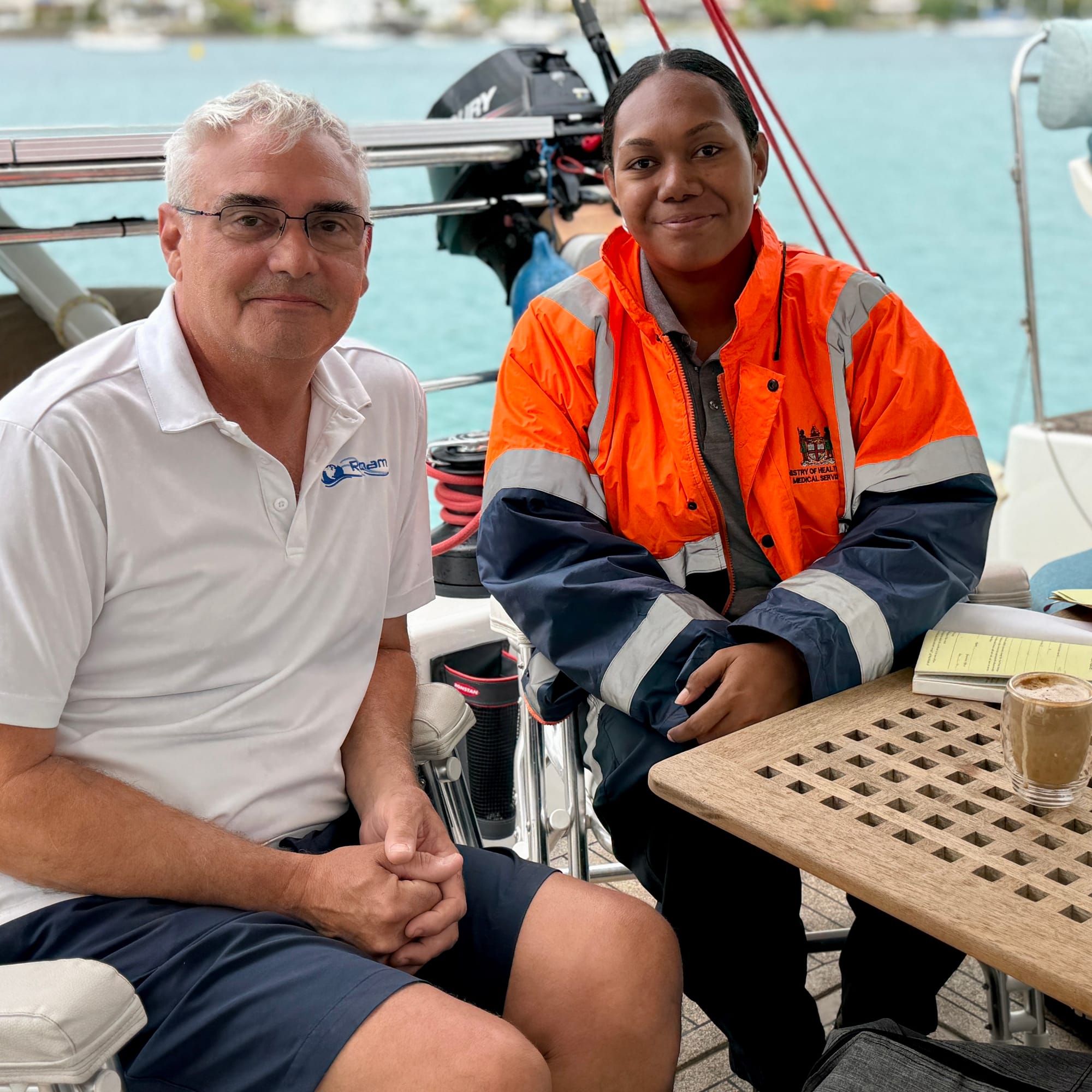
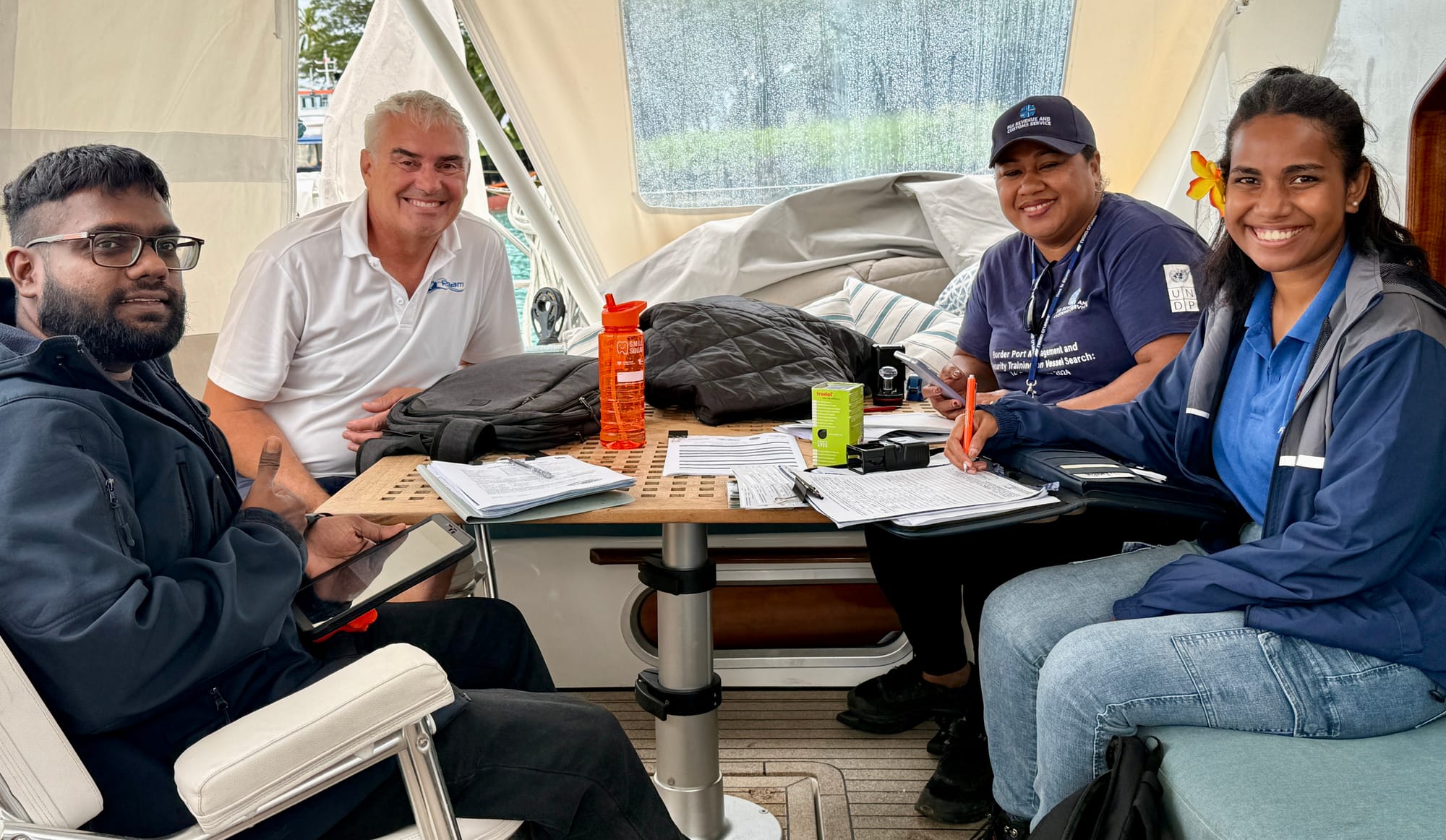
Clearing into Fiji. L-R: Alumita (Health Security), Sahid (Biosecurity), Ana (Immigration), Ani (Customs). Friendly, professional, and efficient.
Last year I said the trip from Fiji to New Zealand was the most challenging ocean passage I'd ever done. I'm sticking with that story. These are demanding crossings.
It was a gift for me to have Greg and Riaan aboard. These guys are grizzled ocean racers. For me, this passage is a big deal. For them, it's a quick jaunt. Every time I'd start thinking about a sail change, they were already harnessed and on deck dealing with it.
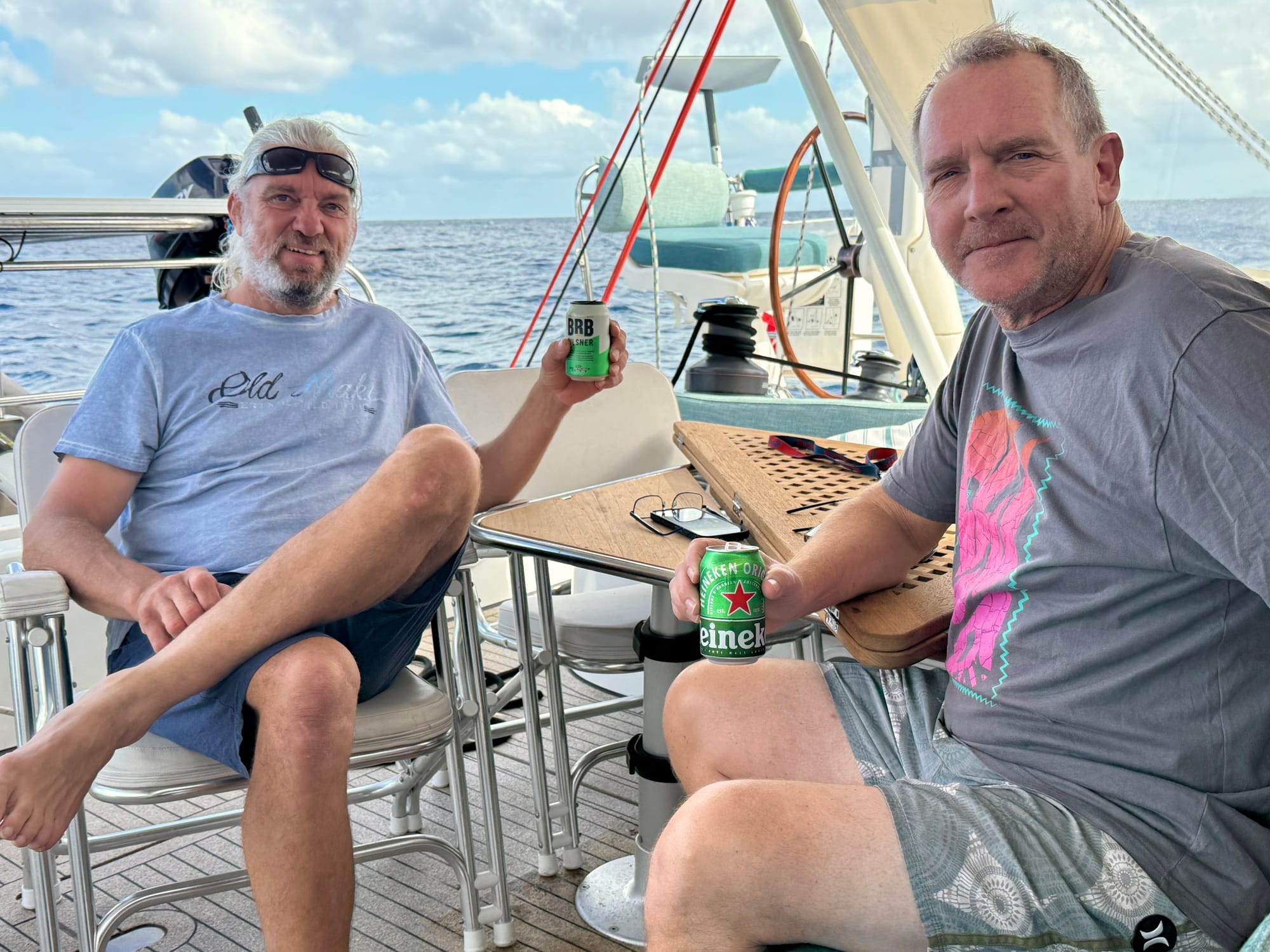
We've also got some things to fix. These guys are supremely talented boat builders. They'll help make short work of the repairs. The boat will be ready for Pam and the kids next week.
For now, we'll soak up some sun at the pool, eat some good food, and swap stories with our fellow passage makers.
And I will remain profoundly grateful for this magnificent boat that took such good care of us and for the mighty crew who helped make this passage happen. Vinaka!
Passage Stats:
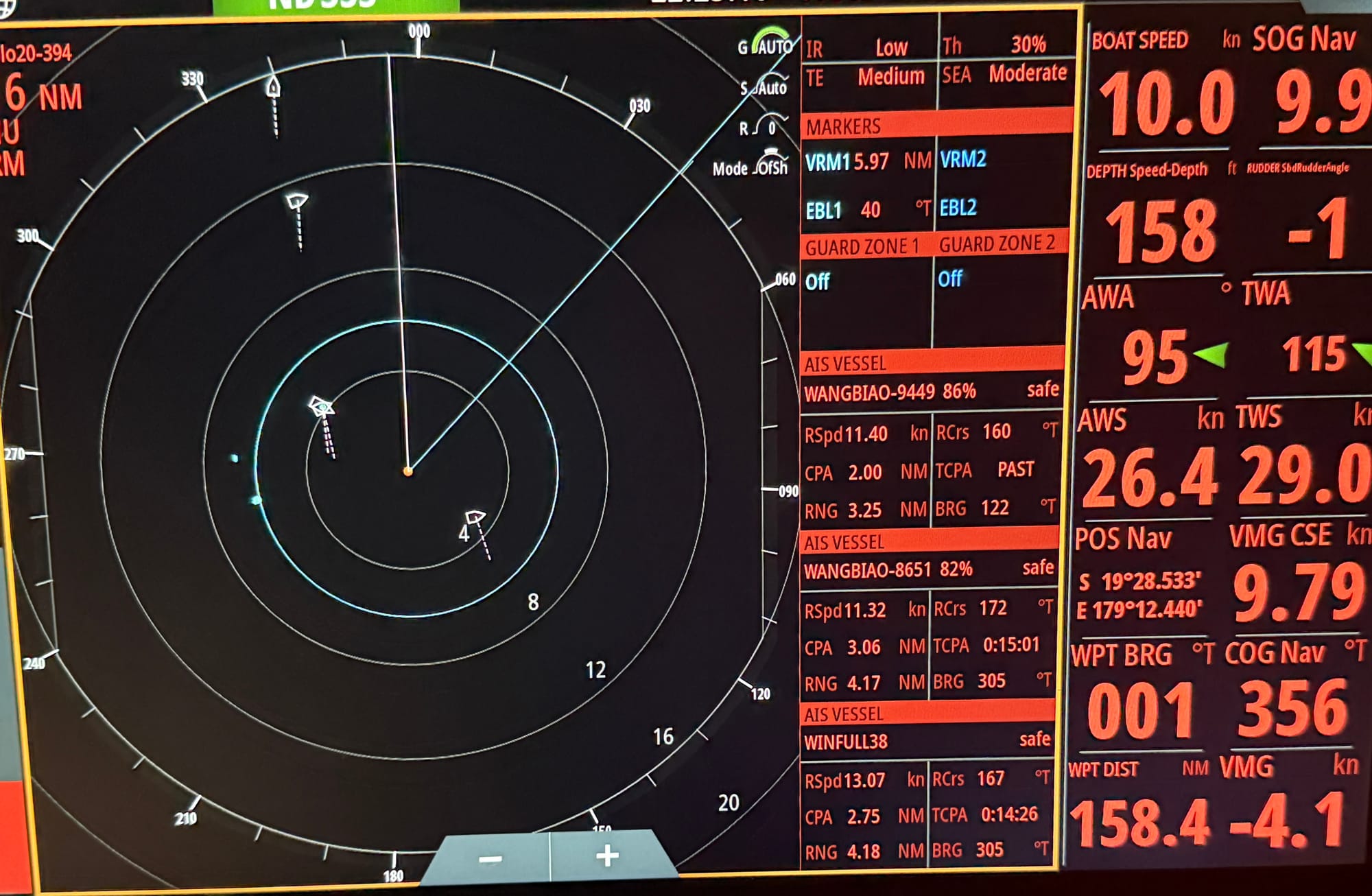
- Distance sailed: 1,205 nautical miles
- Passage duration: 6 days, 3 hours, dock to dock
- Average speed: 8.2 knots
- Highest boat speed: 16 knots (Riaan at the helm)
- Highest wind gust: 38 knots
- Highest seas: 15 feet
- Engine time: 6.6 hours
Clearance Details:
- Health Security: Maritime Declaration of Health, Certificate of Pratique, $234FJD
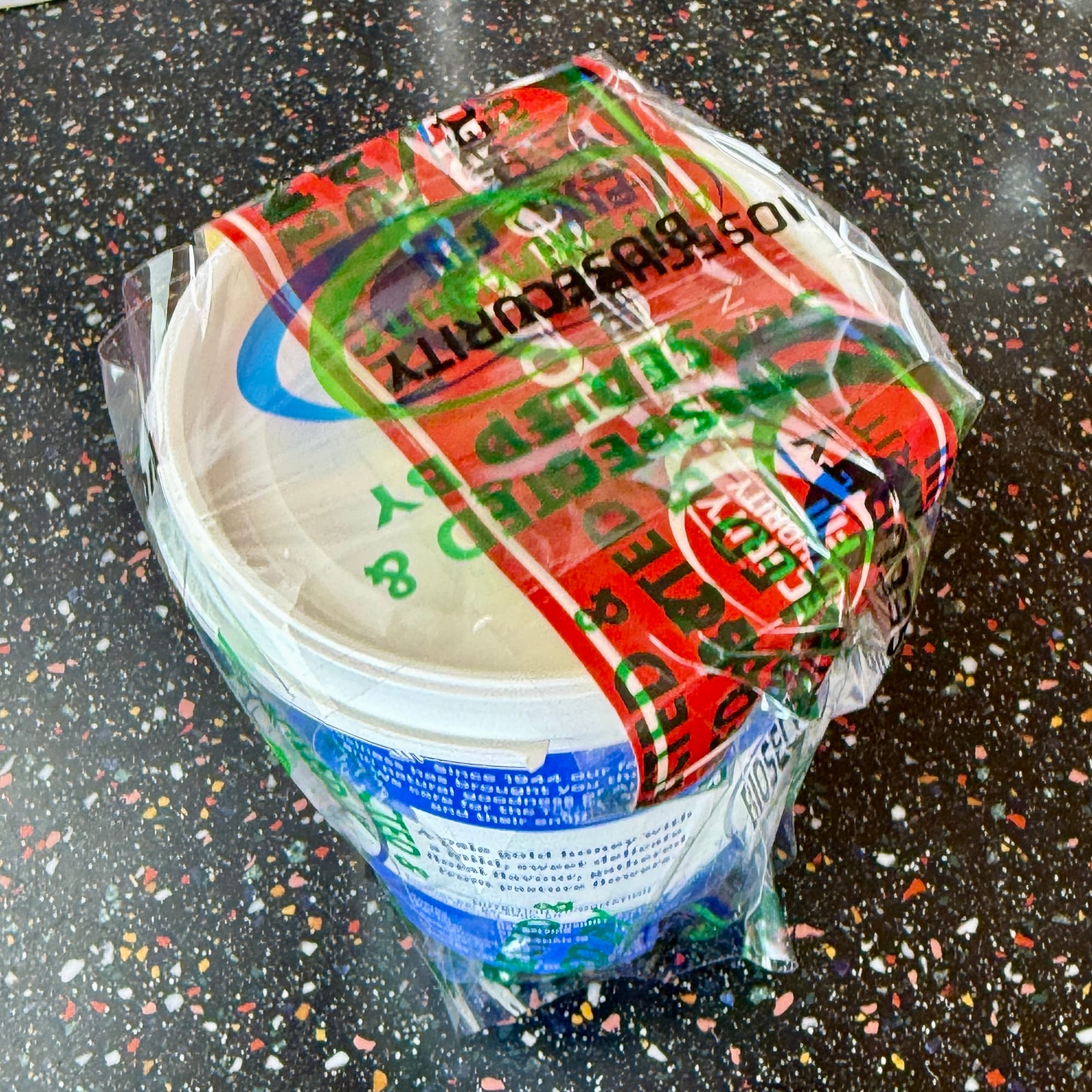
- Biosecurity: Shipping Inspection Report. $355.03FJD. Bonded our pork and honey. No confiscation. We had already tossed our fresh fruits and vegetables before arrival. Eggs, NZ beef, NZ chicken, coffee beans--all ok.
- Immigration: Master's Statement, Authority to Disembark. No fees
- Revenue and Customs: Form C2-C. No fee. This contains the important "Rotation Number" you need for yacht-in-transit status (parts importation).
- Crew Disembark--Immigration then Revenue & Customs: Crew Change Form B. $176.10FJD to remove two crew.
- Cruising Permit: Issued by Revenue & Customs in one to three business days after arrival.
- Letter of Facilitation: Used to allow crew flying in to enter Fiji without an onward tick. Issued by the marina and approved by Revenue & Customs
- Crew Change Form A: Used to add new crew to the crew list. Approved by Revenue & Customs
- Visiting crew, those flying in and flying out, do not need to be added to the crew list.
- Weekly Update: Email noting the location and crew list sent once a week.
A Few Photos
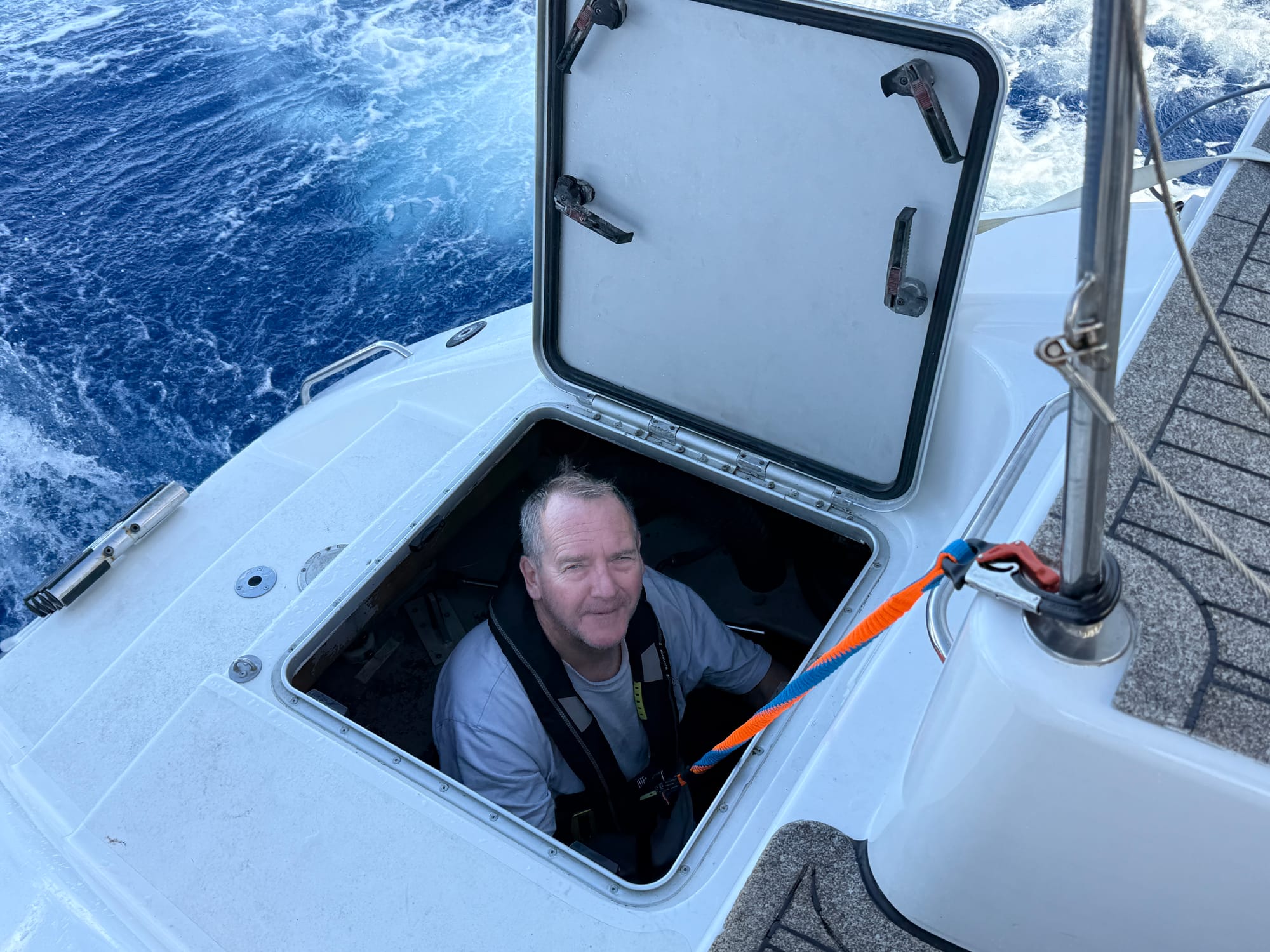
A short clip gives you a sense of Roam's speed. When the passage ends, you realize how loud the wake is.
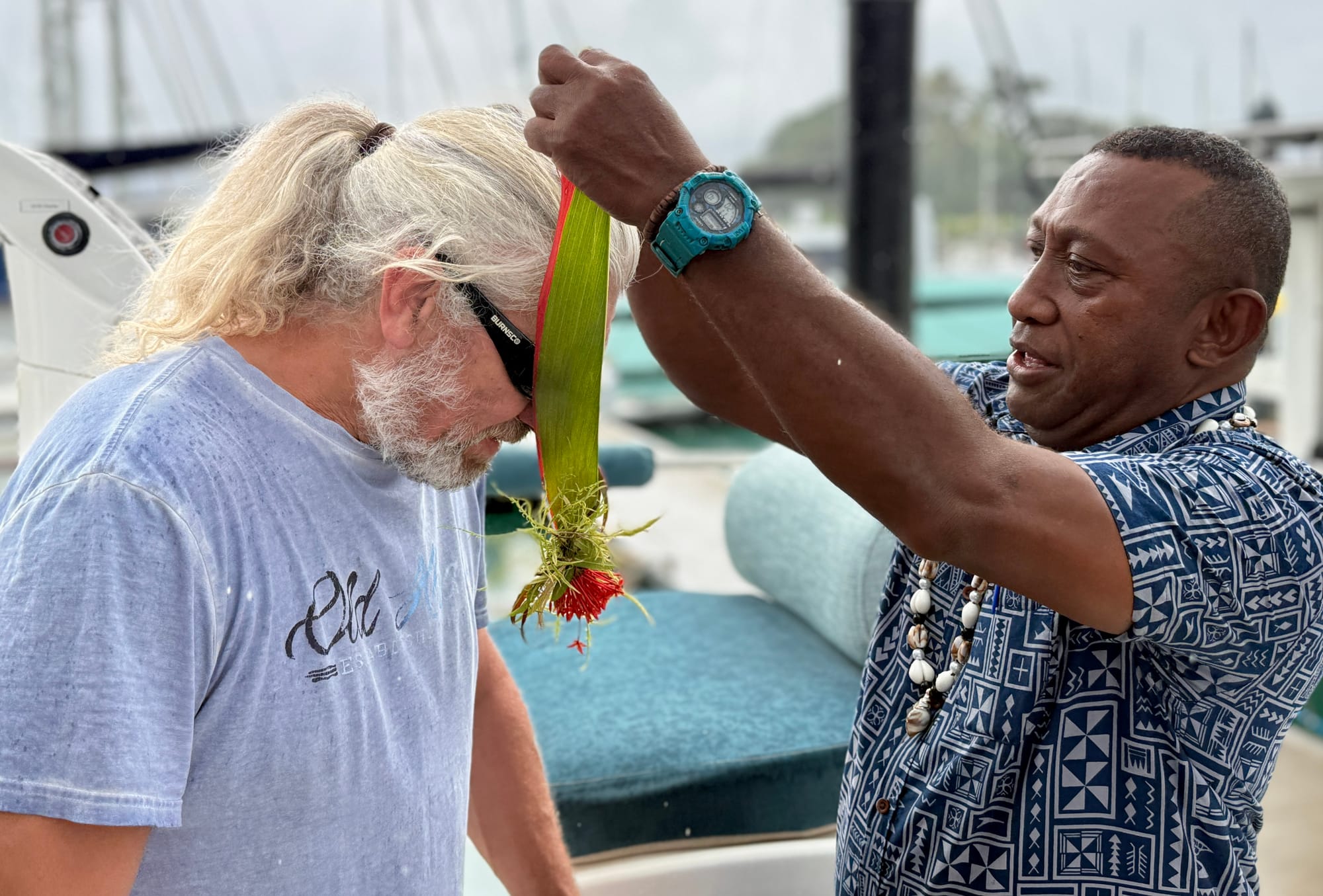
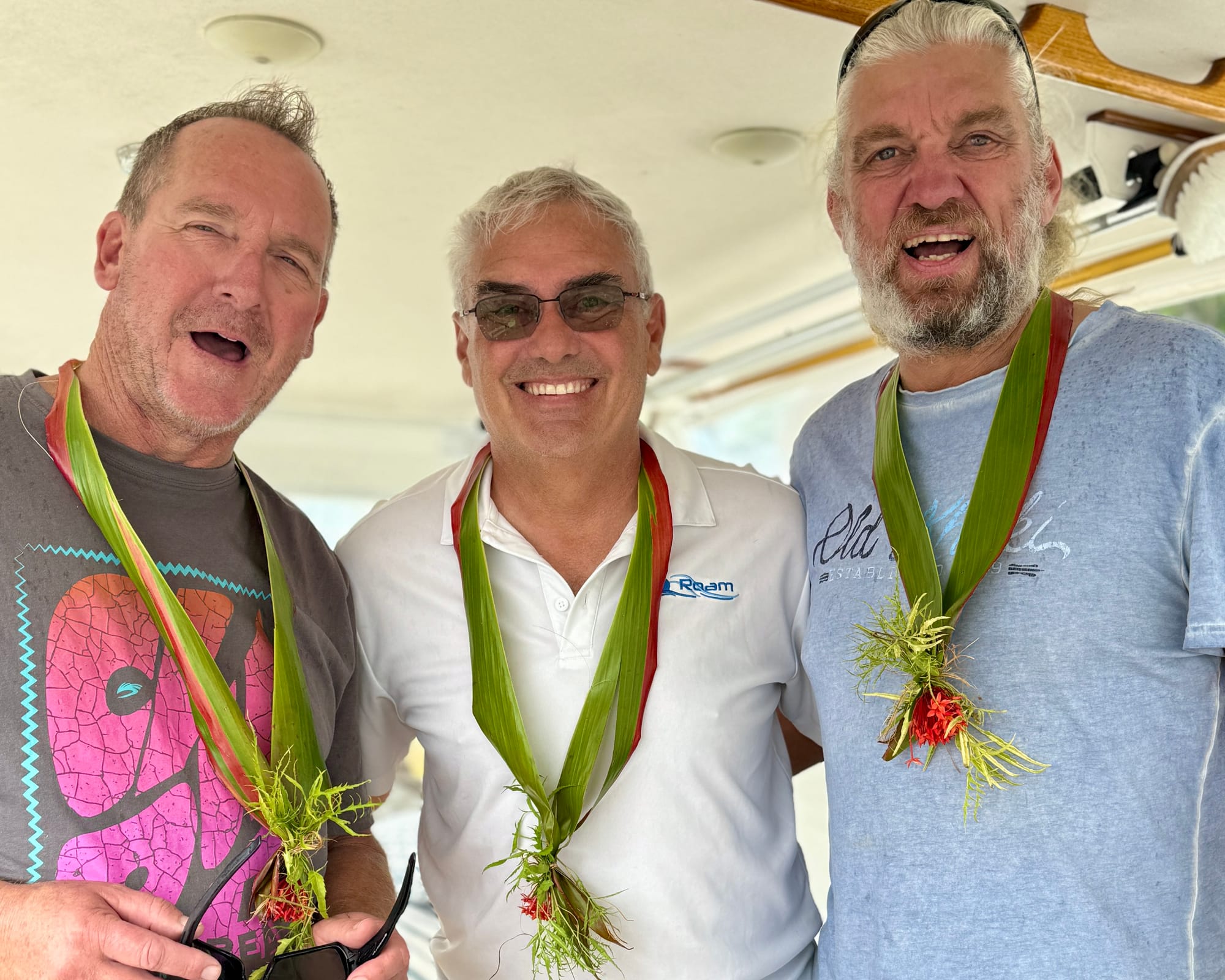
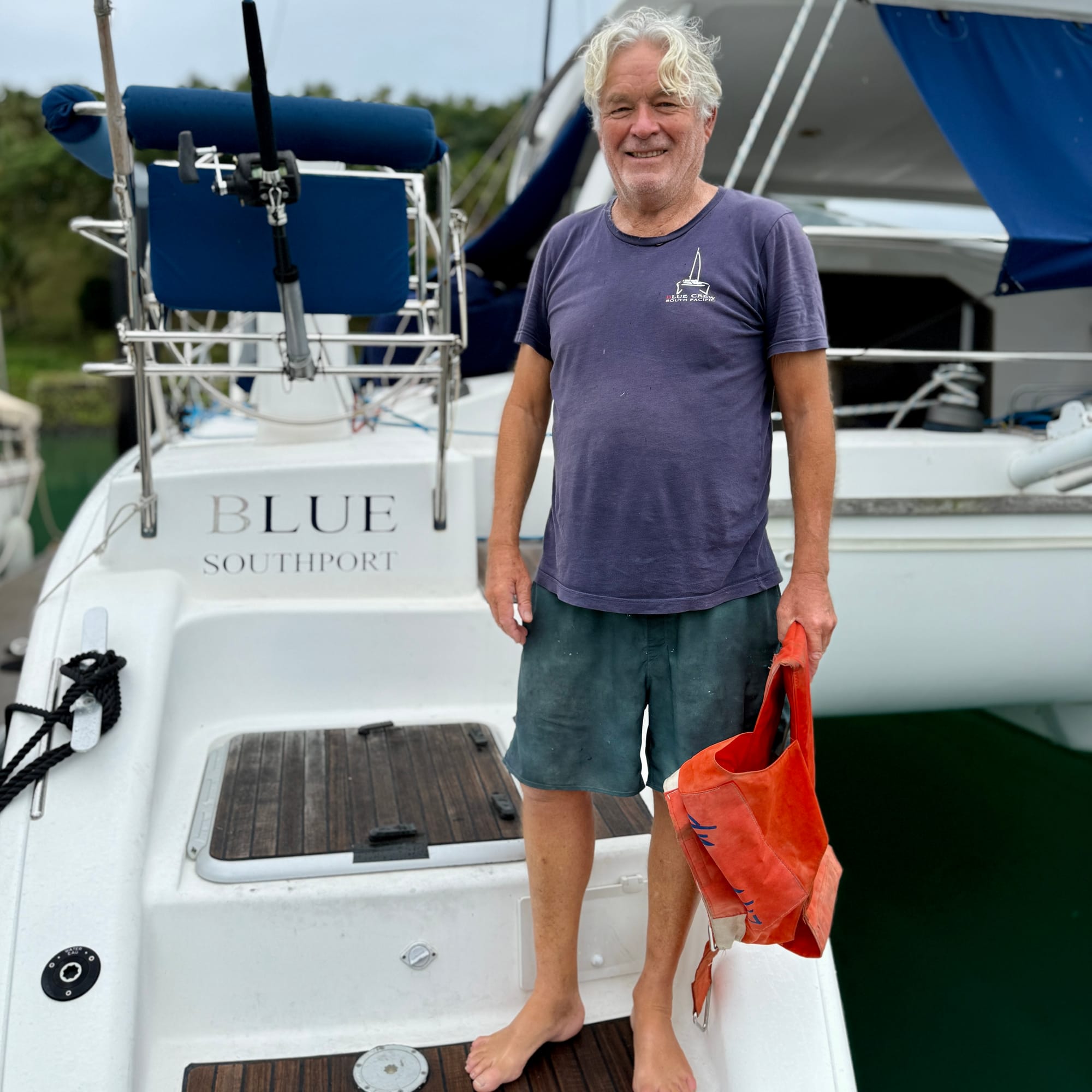
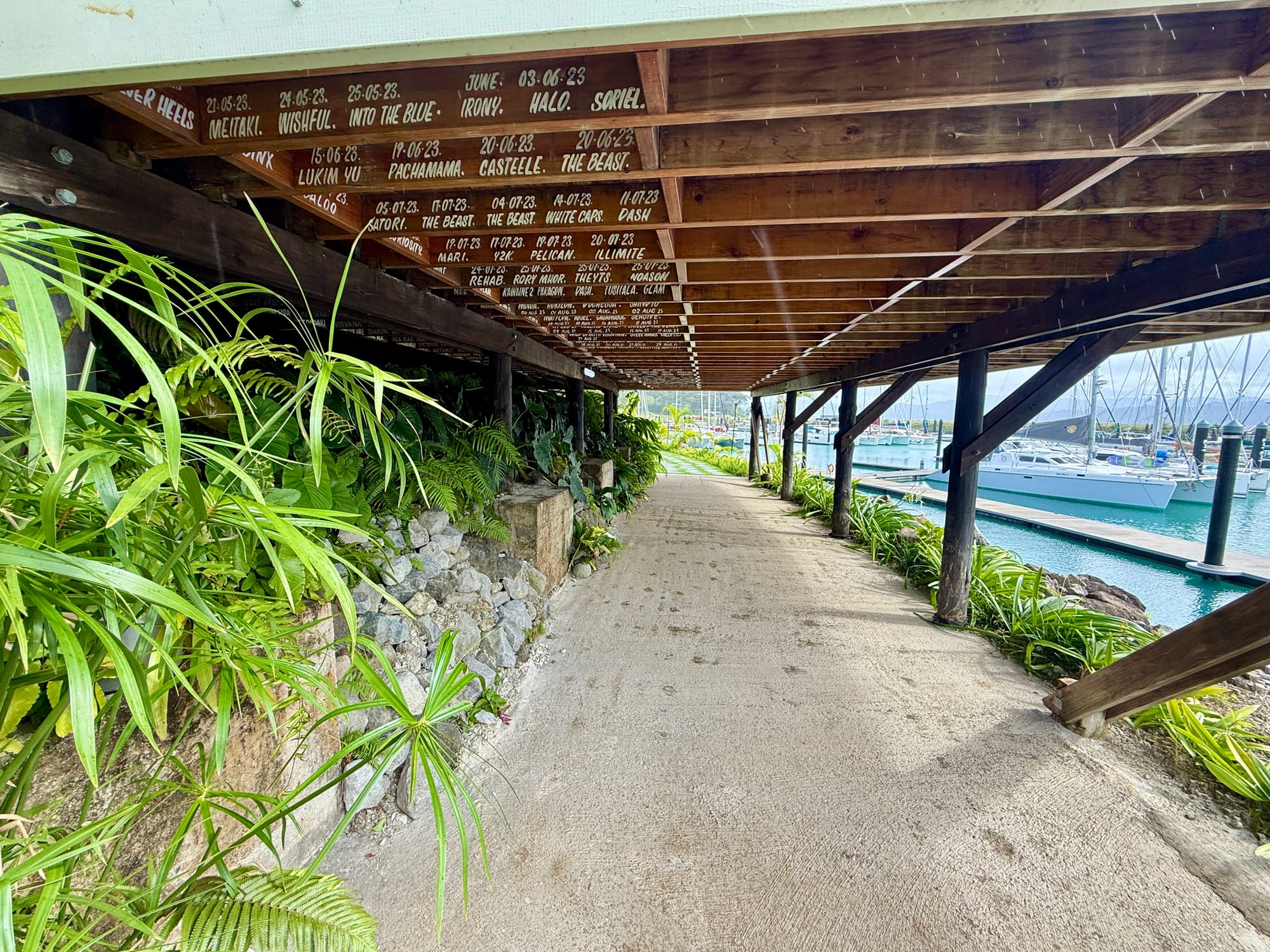
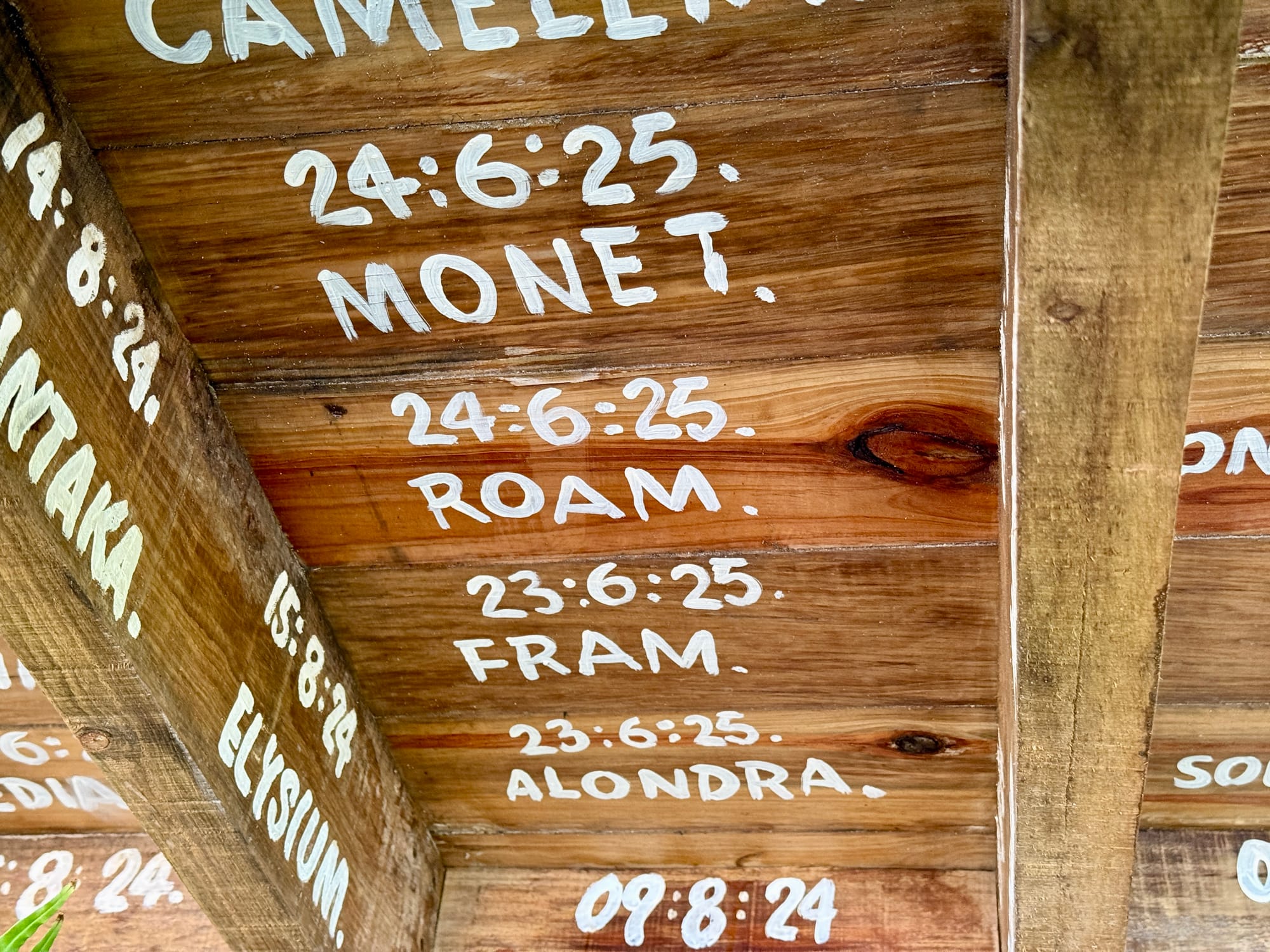
The marina memorializes each yacht's arrival on the deck of the bar. We arrived June 24, 2025 last year.